
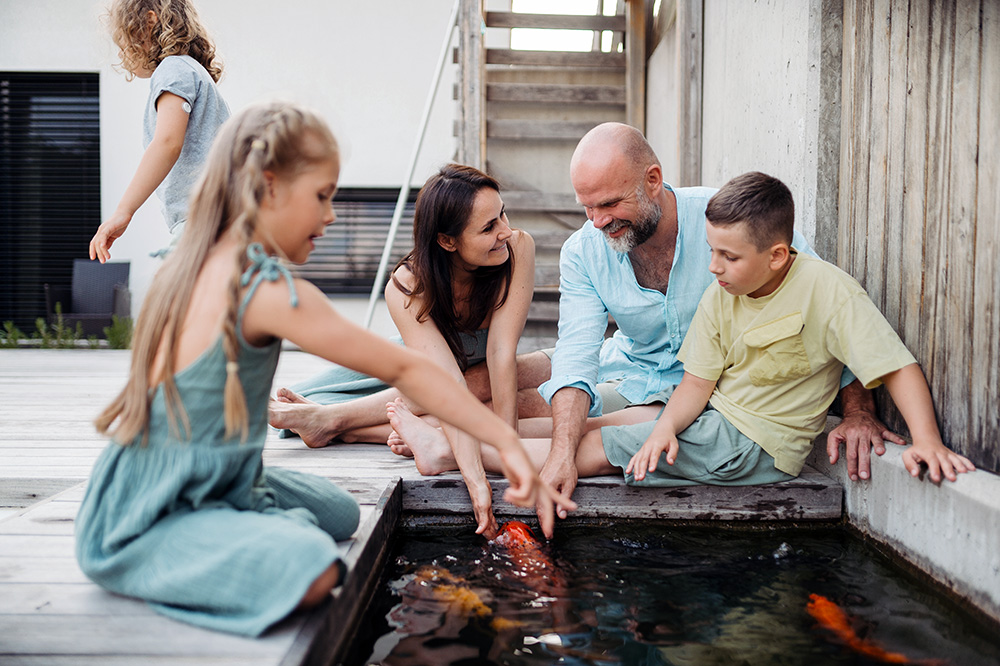
As the weather cools and Summer comes to a close, it is important to start preparing your yard for the Fall. If you have a koi pond in your backyard, you will need to prep it for the colder weather to come.
Cleaning out Fallen Leaves & Debris
As Fall progresses, dying leaves can threaten your koi pond. Decaying leaves can ruin the water quality of your pond. Be sure to clean the pond with a skimmer. You can also use a pond net to prevent debris from reaching the water. Trimming plants away from the pond can also help limit debris. Using a pond vacuum or net to clear debris from the bottom of the pond can also be important to maintaining a clean pond environment.
Aquatic Plants in Your Pond
Aquatic plants help maintain a healthier environment for your fish. However, they can require additional care as you transition to the cooler months. First, trim plants of dead or dying foliage. This will reduce the decaying plant life from affecting the water quality. Then, consider adding more cold-hardy plants to the pond. Lilies help oxygenate the water throughout the Winter, for example.
Maintaining Pond Equipment
Make sure that your pond equipment is ready for the cold weather. Pumps and filters should be inspected and cleaned out for best results. Test water quality and water chemistry. This can include pH, ammonia, and nitrate levels. Properly maintaining safe water conditions can ensure the longevity of your fish.
Adjusting Your Feeding Routine for the Fall
Most fish metabolize food slower during the colder months. Because of this, you will need to adjust when and what you feed the koi. As temperatures drop to 60 degrees Fahrenheit, switch to a wheat-germ-based feed. This will make it easier for the koi to metabolize. You can slow the frequency of feeding as daily temperatures drop to 50 degrees. After 40 degrees, you can stop feeding them entirely.
Partial Water Change for the Fall
Replacing a portion of the water in your pond can help remove some of the toxins and waste material. It is recommended to replace 15-20% of the water in the pond when doing this for the Fall. Swap out the water after a thorough cleaning for best results. Be sure to use a dechlorinating agent in the tap water before adding it to the pond.
Does my Pond Need a Heater for The Fall and Winter?
Pond heaters can keep the water from freezing or fully freezing during the colder seasons. Heaters help with maintaining a well-oxygenated pond and increase the longevity of your fish. Koi and other pond fish naturally go dormant in colder waters, so letting your pond freeze is completely fine. But a heater is a great way to support your fish year-round. Just remember that if the water temperature is maintained throughout the winter, you may have to keep feeding the fish.
For over 40 years, Russo’s Landscaping has offered professional and quality landscaping services on Staten Island. Contact us or call us at 718-727-7914 to discuss your landscape renovation needs.