
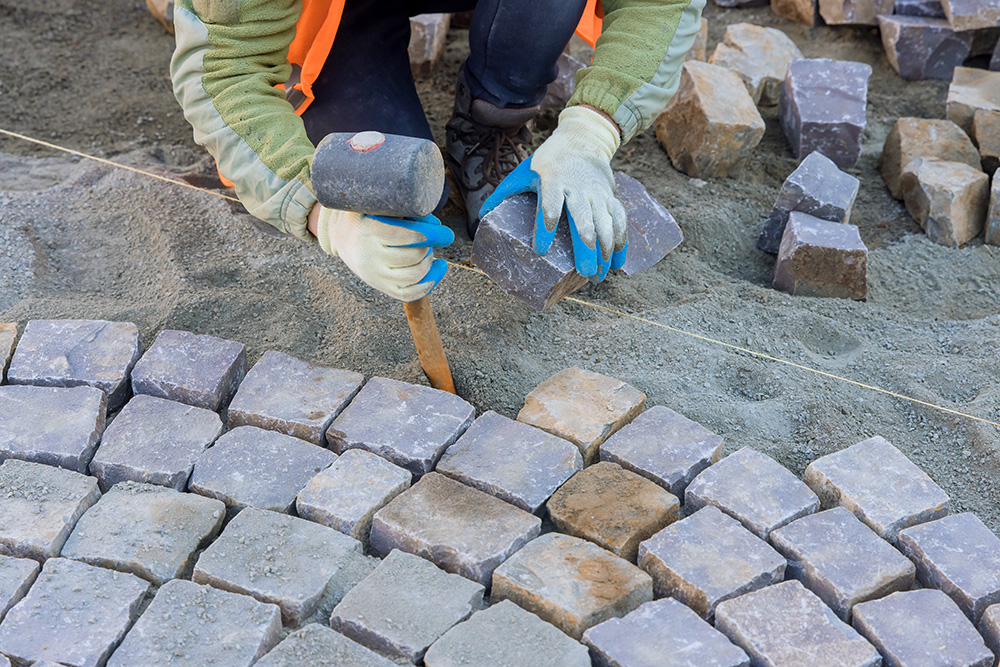
Often, an argument against paving over your yard is that grassy areas help absorb water and prevent flooding. However, there is a way to get the best of both worlds. Permeable pavers are a more environmentally friendly option than traditional pavement options, that help reduce flooding on your property. Below we will discuss the benefits of permeable pavers, to help determine if they are right for your home.
What are Permeable Pavers?
Permeable pavement is a type of masonry that allows rainwater and snowmelt to permeate gaps and run through to the ground. More traditional pavement keeps water on the surface, making flooding more likely. These pavers allow water to get into the ground, making dispersal easier.
Different Forms of Permeable Pavement
There are several different types of permeable pavement options, which allows homeowners to choose the one that best suits their design choices. The three most common are porous asphalt, pervious concrete, and permeable interlocking concrete pavement (PICP).
Porous Asphalt
A high amount of voids in the porous asphalt pavement allows for water to drain through. This helps prevent flooding. Porous asphalt is made with aggregate (rock) materials to keep the pavement strong but permeable. Generally, it is used for driveways or commercial parking lots.
Pervious Concrete
This concrete is made to be highly porous, allowing water to flow through. While concrete traditionally has a mixture of aggregate sizes, pervious concrete will generally have an above-average amount of larger pieces, with little to no smaller aggregate pieces. This results in a sturdy and permeable concrete mixture.
Permeable Interlocking Concrete Pavement
PICP is a type of masonry style that features small gaps in between the paver bricks. The gaps are generally filled with fine gravel. The gravel allows the water to seep into the layer underneath. Below the pavers, a bedding layer of course rocks help keep the pavers steady while allowing for water to flow into the earth below. PICP can be a cost-effective alternative to the above options because there is little difference between the PICP process and traditional paver-laying.
Permeable Pavers and Reducing Flooding
In Staten Island, floods from heavy rains and tropical storms can create serious damage to your home, especially in the basement. Flooding in the home generally occurs when water cannot disperse into the ground fast enough. Permeable pavement alternatives help reduce stormwater runoff while still allowing you to have a finished backyard patio space. Overall, permeable pavers can reduce erosion, flood damage, and water-pumping expenses for your home.
Energy Efficiency and Air Quality with Permeable Pavers
Permeable pavers can also increase energy efficiency and air quality around your home. Generally, permeable pavements absorb less heat than their traditionally designed counterparts. This results in a lower surrounding air temperature, reducing the need to keep your home cooling systems running as much to cool your home. This reduction of heat can also contribute to air quality. Excessive heat on paved surfaces can lead to ozone generation in urban heat islands. But, with a lower heat index, porous pavements contribute less to ozone generation.
Salt and Snowfall
Because pervious pavers can help disperse water more efficiently, there is generally less buildup of snow on these surfaces. This helps reduce the amount of salt needed to keep your pavers de-iced. It also reduces the amount of salt pollution from runoff to surrounding waterways.
Reduction in Water Demand
Permeable pavement helps with water retention for surrounding plants. Your trees, shrubs, grass, and flowers will be able to receive more water from their surrounding environment when compared to non-permeable pavement options. This can reduce the need for reliance on sprinklers or irrigation to keep your plants healthy.
For over 40 years, Russo’s Landscaping has offered professional and quality landscaping services on Staten Island. Contact us or call us at 718-727-7914 to discuss your landscape renovation needs.